U.S. Flag Mandate, Combatting Deepfake Pornography and Legislative Priorities of the Vice President Nominees in 2024 Election
⏱ 2 min read
All American Flag Act (S 1973) – Introduced by Sen. Sherrod Brown (D-OH) on June 14, 2023, this bill requires that all U.S. flags used by the Federal government be manufactured domestically. This includes all raw materials. One exception to this mandate is if flags cannot be produced of acceptable quality and quantity as needed at competitive market prices. The bill passed in the Senate on Nov. 2, 2023, in the House on July 22, and was signed into law by the president on July 30.
Disrupt Explicit Forged Images and Non-Consensual Edits Act of 2024 (S 3696) – This bipartisan bill, also known as the DEFIANCE Act, is designed to protect victims of deepfake pornography. It defines civil action as a federal remedy for non-consensual parties who are identifiable in digital forgeries and depicted as nude or engaging in sexually explicit conduct. The bill, which was introduced on Jan. 30 by Sen. Richard Durbin (D-IL), passed unanimously in the Senate on July 23. It goes to the House next, where a similar bill has been introduced.
Congress is not in session Aug. 5-30, as members return to their districts.
Scroggs & Associates
U.S. Flag Mandate, Combatting Deepfake Pornography and Legislative Priorities of the Vice President Nominees in 2024 Election
September 1, 2024 · Blog, Congress at Work
⏱ 2 min read
All American Flag Act (S 1973) – Introduced by Sen. Sherrod Brown (D-OH) on June 14, 2023, this bill requires that all U.S. flags used by the Federal government be manufactured domestically. This includes all raw materials. One exception to this mandate is if flags cannot be produced of acceptable quality and quantity as needed at competitive market prices. The bill passed in the Senate on Nov. 2, 2023, in the House on July 22, and was signed into law by the president on July 30.
Disrupt Explicit Forged Images and Non-Consensual Edits Act of 2024 (S 3696) – This bipartisan bill, also known as the DEFIANCE Act, is designed to protect victims of deepfake pornography. It defines civil action as a federal remedy for non-consensual parties who are identifiable in digital forgeries and depicted as nude or engaging in sexually explicit conduct. The bill, which was introduced on Jan. 30 by Sen. Richard Durbin (D-IL), passed unanimously in the Senate on July 23. It goes to the House next, where a similar bill has been introduced.
Congress is not in session Aug. 5-30, as members return to their districts.
Disclaimer
These articles provide general information on tax, accounting, and financial topics for small businesses and individuals. They are educational in nature and are not specific legal, accounting, financial, tax, or other professional advice, and should not be relied upon as such. This content was prepared by Service2Client and may have been reviewed or edited by the website owner for accuracy and compliance. Look for a trust mark below for verification details. No representation is made that any approach described will achieve a particular result, and no regulatory or professional body has reviewed or endorsed this content. Because each situation is different, readers should consult a qualified professional about their specific circumstances before acting. Images accompanying these articles are protected by copyright and may not be copied or reused.
Manage Consent
To provide the best experiences, we use technologies like cookies to store and/or access device information. Consenting to these technologies will allow us to process data such as browsing behavior or unique IDs on this site. Not consenting or withdrawing consent, may adversely affect certain features and functions.
Functional
Always active
The technical storage or access is strictly necessary for the legitimate purpose of enabling the use of a specific service explicitly requested by the subscriber or user, or for the sole purpose of carrying out the transmission of a communication over an electronic communications network.
Preferences
The technical storage or access is necessary for the legitimate purpose of storing preferences that are not requested by the subscriber or user.
Statistics
The technical storage or access that is used exclusively for statistical purposes.The technical storage or access that is used exclusively for anonymous statistical purposes. Without a subpoena, voluntary compliance on the part of your Internet Service Provider, or additional records from a third party, information stored or retrieved for this purpose alone cannot usually be used to identify you.
Marketing
The technical storage or access is required to create user profiles to send advertising, or to track the user on a website or across several websites for similar marketing purposes.


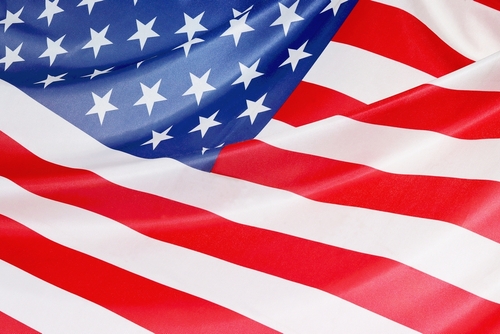 All American Flag Act (S 1973) – Introduced by Sen. Sherrod Brown (D-OH) on June 14, 2023, this bill requires that all U.S. flags used by the Federal government be manufactured domestically. This includes all raw materials. One exception to this mandate is if flags cannot be produced of acceptable quality and quantity as needed at competitive market prices. The bill passed in the Senate on Nov. 2, 2023, in the House on July 22, and was signed into law by the president on July 30.

